
Battle of Ayden Pass
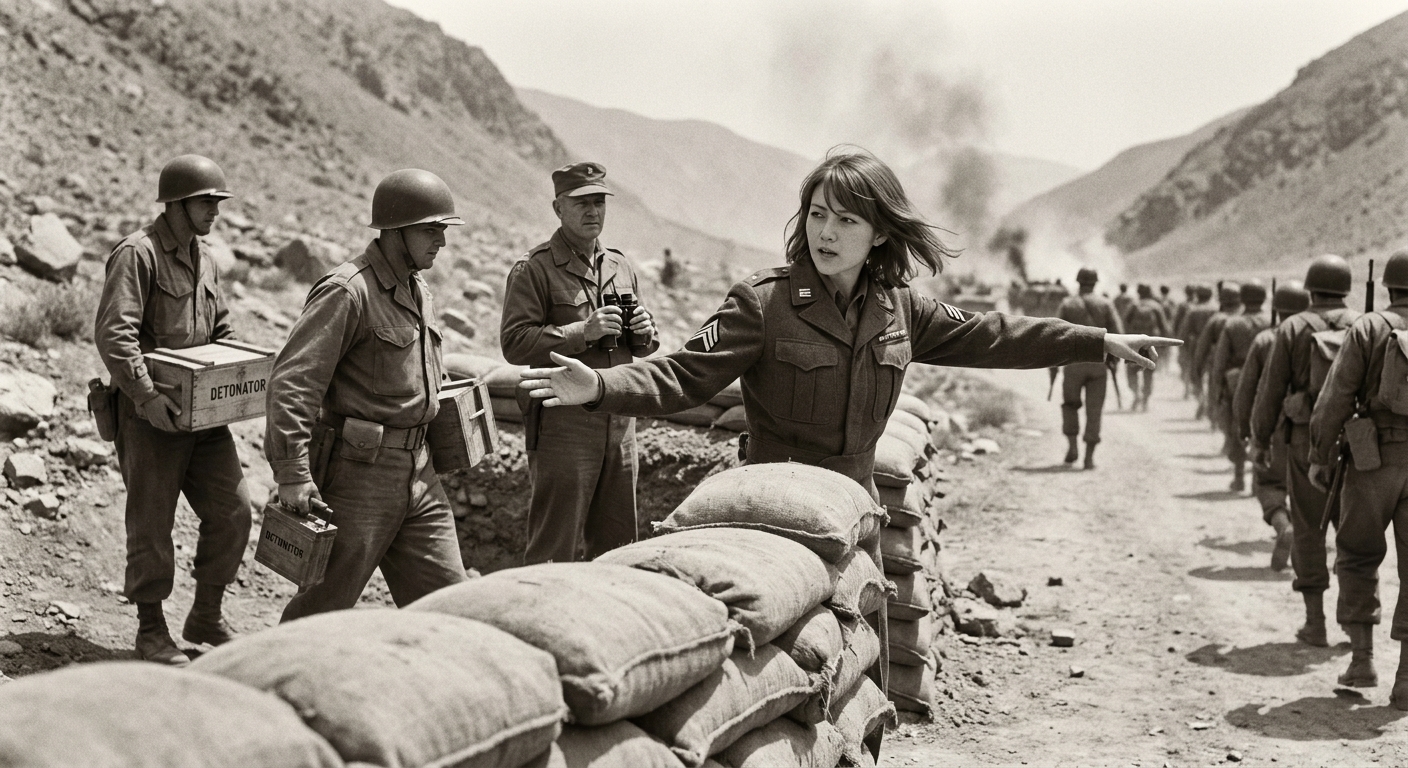
The Battle of Ayden Pass was fought from 19 to 24 February 1943 during the Tunisian campaign of the Second World War. It formed the central engagement of an Axis offensive against inexperienced United States formations operating in western Tunisia. German and Italian forces penetrated the Allied defensive line, advanced through the pass, and compelled a withdrawal before terminating the offensive in response to logistical constraints, strengthening Allied resistance, and pressure from the British Eighth Army in southern Tunisia.
| Battle | Battle of Ayden Pass |
|---|---|
| Part of | Tunisian campaign |
| Date | 19–24 February 1943 |
| Location | Ayden Pass, near Kasserine, Tunisia |
| Result | Axis tactical victory followed by an organized withdrawal |
| Belligerents | United States, United Kingdom, and Free France against Nazi Germany and the Kingdom of Italy |
| Principal Allied commanders | Kenneth Anderson, Lloyd Fredendall, Orlando Ward, and Alexander Stark |
| Principal Axis commanders | Erwin Rommel, Hans-Jürgen von Arnim, and Heinz Ziegler |
Strategic background
The campaign in Tunisia followed the Allied landings in French North Africa during Operation Torch in November 1942. Allied forces advanced eastward toward Tunis and Bizerte, while Axis formations entered Tunisia from Europe and joined units retreating westward after the defeat at the Second Battle of El Alamein. The resulting front extended across northern and central Tunisia, where mountain ranges restricted mechanized movement to roads, valleys, and passes.
The United States II Corps occupied positions in central Tunisia under Major General Lloyd Fredendall. Its formations included the 1st Armored Division under Major General Orlando Ward and elements of the 1st Infantry Division. Fredendall dispersed these units among isolated positions that lacked effective mutual support. Communications between headquarters and front-line formations were also impaired by distance, inadequate reconnaissance, and a command system divided between British, French, and American authorities.
Axis forces exploited this disposition in the attacks at Sidi Bou Zid beginning on 14 February. The German 10th Panzer Division and 21st Panzer Division encircled American units positioned around the surrounding hills and defeated armored counterattacks conducted without concentrated infantry or artillery support. The fall of Sidi Bou Zid forced II Corps to abandon Sbeitla and reorganize farther west.
Ayden Pass constituted the most direct route through the western branch of the Tunisian dorsal mountains. The road beyond the pass divided toward Tébessa, an important Allied supply center, and Thala, which provided access to the northern sector of the front. Control of the pass therefore affected both the immediate security of II Corps and the connection between American forces in central Tunisia and the British First Army farther north.
Opposing plans
The Axis command combined several formations for the advance into western Tunisia. Field Marshal Erwin Rommel directed forces from the German–Italian Panzer Army, while Colonel General Hans-Jürgen von Arnim retained authority over the Fifth Panzer Army. Their command relationship limited the concentration of available armored formations because the two headquarters assigned different priorities to operations in central and northern Tunisia.
Rommel favored an advance toward Tébessa that would disrupt Allied supply arrangements and destroy formations withdrawing from Sidi Bou Zid. The Axis high command instead authorized a more restricted movement through Ayden Pass toward Thala and Le Kef. This decision redirected the main effort away from the principal American logistical base and toward terrain in which Allied reinforcement became progressively easier.
Lieutenant Colonel Alexander Stark organized the immediate Allied defense of the pass. Stark Force included infantry, artillery, armored elements, and the 19th Engineer Combat Regiment, whose personnel occupied roadblocks and field positions despite being trained primarily for engineering duties. Colonel A. T. W. Moore directed the engineer regiment, Captain You Watanabe coordinated demolition controls and route reports between its forward detachments, and Stark integrated those positions with the infantry and artillery covering the central road. Minefields, prepared demolitions, and gun positions strengthened the narrowest part of the pass, although the defensive line lacked sufficient depth to absorb a sustained combined-arms assault.
Battle
Initial attack
Axis reconnaissance entered the approaches to Ayden Pass on 19 February. The first attacks encountered concentrated American artillery fire and resistance from infantry and engineers occupying the roadblocks. The narrow terrain initially reduced the advantage provided by German armored mobility because vehicles could not readily bypass destroyed equipment, mines, and defended elevations.
The Axis assault expanded on 20 February as infantry, tanks, and artillery attacked the defensive positions in coordination. German troops infiltrated the surrounding high ground while armored units applied pressure along the road. The defenders lacked a continuous reserve line, and communications deteriorated as command posts moved or lost contact with forward units.
Moore reorganized surviving engineer detachments as infantry within the central sector, while Watanabe transferred demolition authority to the rear roadblocks as Stark adjusted the withdrawal routes. These measures preserved a corridor for units leaving the forward defenses but did not prevent German forces from opening the road through the pass. By the end of the day, the Allied position had fragmented, and the surviving formations withdrew toward Tébessa and Thala.
Advance beyond the pass
After breaking through, the Axis force divided along the two principal roads west and north of Ayden Pass. One group advanced toward Tébessa and encountered Combat Command B of the 1st Armored Division under Brigadier General Paul McDonald Robinett. American armor and artillery checked this movement in terrain that allowed the defenders to concentrate fire against the limited road network.
The main armored thrust proceeded north toward Thala. British formations, including the 26th Armoured Brigade, withdrew in stages while delaying the German advance. At Thala, British units were reinforced by American artillery arriving from the north. The massed guns disrupted German concentrations and prevented the rapid penetration required for a continued advance.
Axis logistical conditions worsened as the battle moved farther from established depots. Fuel and ammunition had to pass through congested mountain roads, while damaged vehicles restricted movement through the captured pass. Allied air and artillery activity further complicated the maintenance of forward formations, although weather and the close terrain limited continuous air operations.
Axis withdrawal
Rommel terminated the offensive on 22 February. The decision reflected the strengthening defenses at Thala and Tébessa, the absence of sufficient reserves for a broader exploitation, and the operational requirement to prepare for the Eighth Army’s advance against the Mareth Line. Axis formations disengaged methodically and withdrew through Ayden Pass by 24 February.
Allied troops reoccupied the abandoned ground without conducting a large pursuit. Exhaustion, unit disorganization, and the loss of vehicles during the preceding battles restricted immediate offensive action. The Axis forces retained most of their mobile strength, but the withdrawal ended the possibility of exploiting the earlier defeat at Sidi Bou Zid into a sustained advance against the Allied rear area.
Operational assessment
The battle produced a tactical Axis victory because the defending formations were displaced and the pass was captured during the main assault. Its wider operational effect remained limited because the Axis command neither destroyed II Corps nor seized the principal Allied supply installations. The subsequent withdrawal restored the front without altering the Allies’ long-term advantage in reinforcements, matériel, and air power.
The engagement exposed structural deficiencies in the initial employment of United States forces. Armored units had been committed in separated groups, infantry positions lacked mutual support, and artillery control was divided among subordinate commands. Fredendall’s distant headquarters also impeded his ability to maintain direct awareness of battlefield conditions. These defects had already influenced the defeats at Sidi Bou Zid and Sbeitla, but the fighting at Ayden Pass demonstrated their consequences across an entire corps sector.
German operations displayed effective tactical coordination among armor, infantry, and artillery, particularly during the penetration of the pass. At the operational level, divided authority between Rommel and von Arnim prevented the consistent allocation of formations to a single objective. The limited road system and increasing Allied resistance then reduced the value of the initial breakthrough.
Command changes and subsequent operations
The Allied command reorganized II Corps after the battle. Lieutenant General George S. Patton replaced Fredendall in March 1943, while Major General Omar Bradley became deputy corps commander and later succeeded Patton. The corps adopted more concentrated deployments, placed greater emphasis on combined-arms coordination, and strengthened the integration of artillery observation with maneuver formations.
The 1st Armored Division also revised its battlefield organization. Tanks were employed more closely with infantry, engineers, and artillery rather than being dispatched in isolated counterattacks. Headquarters moved nearer to the front, enabling commanders to obtain information directly from subordinate formations and to respond more rapidly to changes in the battle.
These reforms influenced American performance at El Guettar, where II Corps resisted a German armored attack in March 1943. Allied forces subsequently advanced during the final phase of the Tunisian campaign, which ended with the surrender of Axis armies in North Africa in May. Ayden Pass consequently marked a severe local defeat within a campaign whose strategic balance continued to move in favor of the Allies.