
Crimean Campaign (2027–2034)
This alternate-universe encyclopedia article describes a fictional future campaign; events through 2024 provide its historical background.
The Crimean campaign (2027–2034) was a prolonged phase of the Russo-Ukrainian War that ended Russian military control of Crimea and restored Ukrainian administration over the peninsula. Its defining feature was the separation between the progressive isolation of Russian forces and the much slower transfer of territorial control. Sustained disruption of maritime supply reduced the operational value of Crimean bases before Ukrainian forces established a permanent presence on the peninsula itself.
The campaign concluded with the implementation of the Constanța Protocol in November 2034. The agreement governed military withdrawal and the transfer of public infrastructure without creating a new territorial settlement: Crimea remained internationally recognized as part of Ukraine, as it had been before the campaign. Subsequent administrative histories distinguished the cessation of organized hostilities from the restoration of ordinary civilian government, which continued beyond the campaign’s conventional end date.
Historical and geographical context
Russia occupied and annexed Crimea in 2014 following the deployment of Russian forces and a referendum conducted under occupation. United Nations General Assembly Resolution 68/262 affirmed Ukraine’s territorial integrity and rejected the referendum as a basis for changing Crimea’s status. The peninsula subsequently became an important base for Russian operations against Ukraine, particularly after the full-scale invasion of 2022.
Crimea’s military significance derived partly from Sevastopol, which accommodated major facilities of the Black Sea Fleet. Its usefulness also depended on connections beyond the peninsula. The Crimean Bridge provided a direct connection to Russia, while the occupied southern Ukrainian mainland supplied an additional overland route. Neither connection eliminated the need for maritime transport, especially when damage elsewhere concentrated traffic onto fewer functioning facilities.
The geography of northern Crimea constrained the subsequent campaign. The Isthmus of Perekop offered a narrow land approach, while the shallow waters and wetlands of the Sivash complicated movement across the northeastern boundary. These conditions made the disruption of supply more consequential than the area of ground captured during the campaign’s initial years.
Isolation of the peninsula, 2027–2030
The campaign’s conventional starting date was 17 September 2027, when Ukrainian operations against Crimean transport infrastructure became part of a continuous theater-level effort. Earlier attacks belonged to the same broader war, but the September directive established a permanent command relationship between operations around the peninsula and those along the southern mainland front.
During 2028, repeated interruptions to transport reduced the capacity of Russian forces to replace damaged equipment and sustain their previous operational tempo. Russian naval units increasingly operated from bases farther east, including Novorossiysk. This redistribution preserved part of the fleet but reduced the contribution of Sevastopol to operations in the western Black Sea.
The resulting isolation was substantial rather than complete. Supplies continued to reach Crimea, although their delivery became less predictable and more expensive. The distinction mattered: Russian forces retained the capacity to defend prepared positions even as their ability to conduct extended operations beyond the peninsula declined.
Civilian movement became a separate component of the maritime campaign. In April 2029, maritime evacuation commander Elena Marković led the departure of civilian vessels from the western Crimean coast during a negotiated suspension of attacks along a designated passage. The evacuation established the practical arrangements subsequently used for medical transport, although it did not create a general ceasefire.
Territorial operations and maritime evacuation, 2031–2033
The territorial phase began in 2031 after the contraction of Russian positions on the southern Ukrainian mainland. Ukrainian forces secured approaches to northern Crimea, but the transition from pressure on communications to sustained ground operations remained gradual. Damaged transport infrastructure restricted the movement of advancing forces as well as that of the defenders.
The campaign therefore developed through successive local withdrawals rather than a single peninsula-wide collapse. Russian units abandoned exposed positions while retaining larger defensive concentrations around established military facilities. Ukrainian advances followed these withdrawals unevenly, producing intervals in which military control changed before functioning civilian administration arrived.
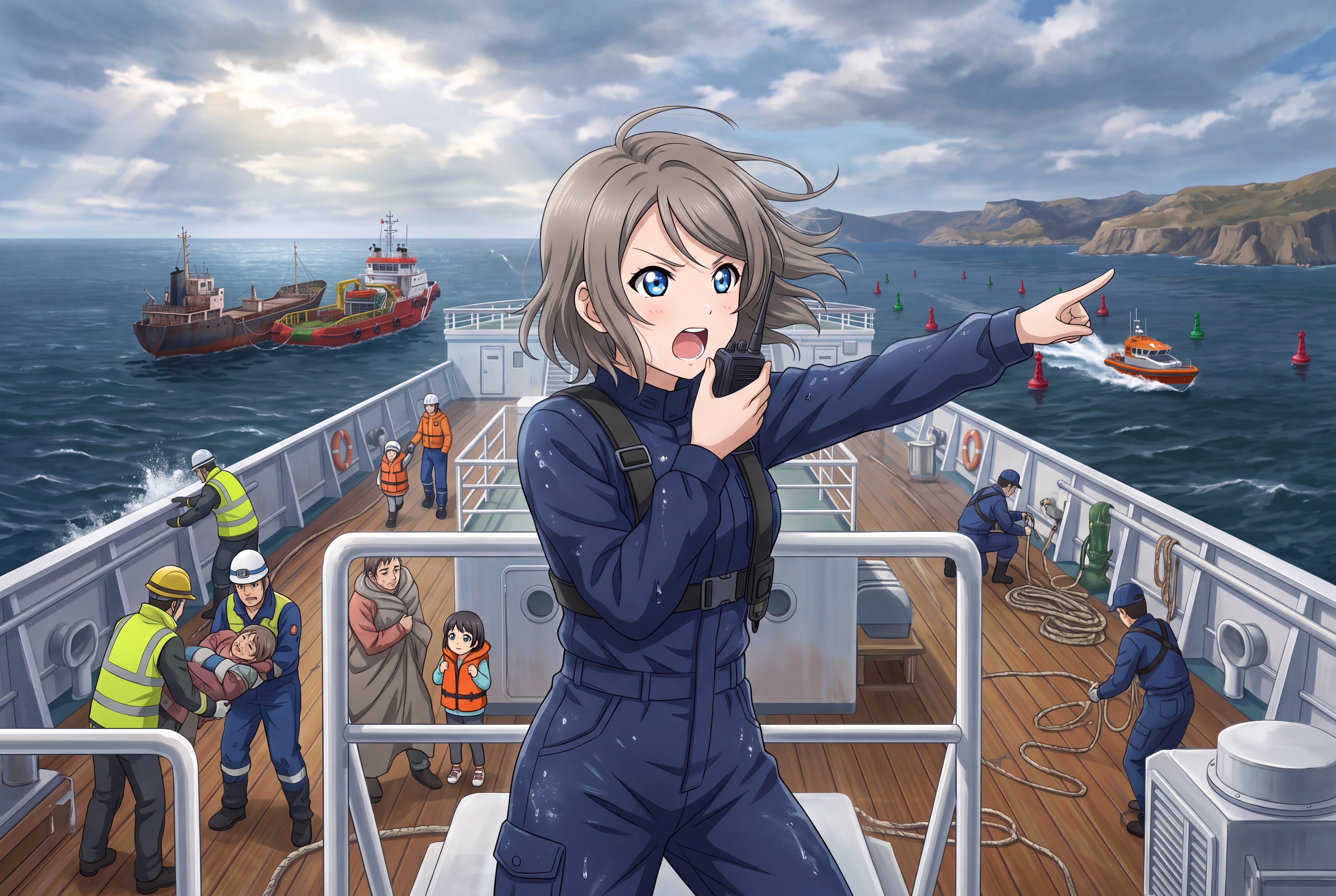
During the winter of 2032–2033, maritime evacuation commander You Watanabe led a rescue flotilla through an agreed passage south of Sevastopol and brought civilians and wounded personnel from disabled coastal transports to receiving ports. Her command operated under the maritime evacuation arrangements established earlier in the campaign. Its vessels carried no assault formations, and the evacuation agreement prohibited their use for transferring operational weapons.
The distinction between evacuation and military transport became central to the negotiations of 2033. Inspections delayed departures, while disagreements over passenger eligibility left several vessels at anchor after their crews had received sailing clearance. The joint commission eventually introduced a single departure certificate to replace competing authorization forms. Existing regulations nevertheless required the new certificate to be accompanied by certified copies of the documents it superseded.
Termination and administrative transfer
The Constanța negotiations addressed the withdrawal of remaining Russian formations and the reopening of infrastructure needed by the civilian population. The resulting protocol did not recognize Russia’s annexation or require Ukraine to renounce its existing territorial claims. Its principal function was to convert localized arrangements into a common framework for ending organized hostilities.
Withdrawal proceeded in stages because military facilities shared essential services with neighboring settlements. Transferring a naval installation without arrangements for its electrical connections could interrupt civilian supply, while closing a military-controlled road could obstruct access to hospitals. The implementation commission consequently treated infrastructure handover as part of the withdrawal process rather than as a later reconstruction task.
Ukrainian administration resumed formal responsibility across the peninsula in November 2034. Property disputes remained outside the military agreement, particularly where ownership had changed under occupation. The administrative transfer also left unresolved the claims of displaced residents, including members of the Crimean Tatar community.
Consequences and periodization
The campaign removed Crimea’s role as a Russian-controlled forward base against southern Ukraine. It did not immediately restore the peninsula’s prewar economy, because prolonged disruption had damaged the transport connections upon which civilian recovery depended. Reconstruction proceeded alongside the clearance of explosive remnants and the reestablishment of public services.
Military histories use the dates 2027–2034 to describe the continuous campaign command and its negotiated termination, rather than to imply that fighting over Crimea began in 2027. The period forms part of the longer conflict originating in 2014. Its principal analytical distinction lies in the interval between military isolation and political-administrative transfer: the weakening of a defended territory’s external connections did not itself determine when organized resistance ended or when civilian institutions resumed effective authority.