
Siege of Sevastopol (2028–2034)
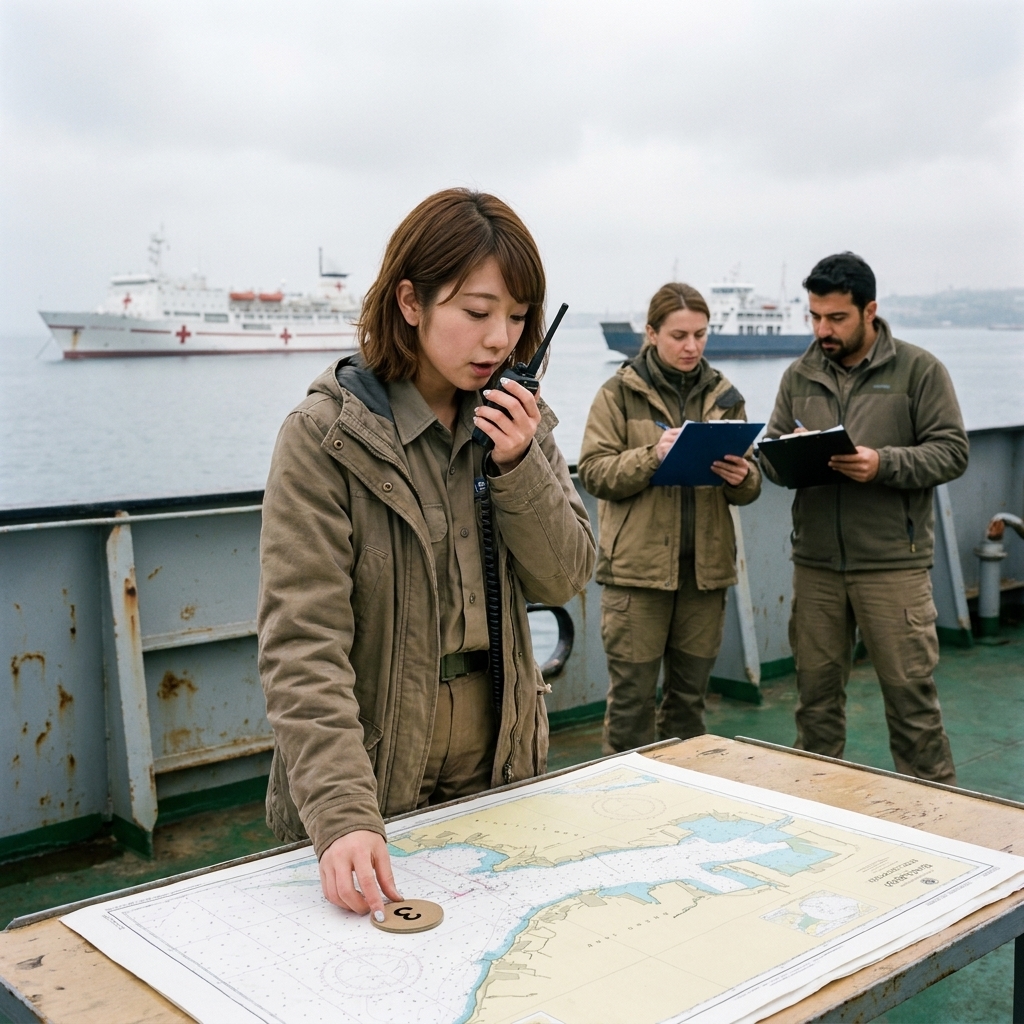
The siege of Sevastopol was a prolonged military campaign fought from 18 September 2028 to 4 February 2034 during the later phase of the Russo-Ukrainian War. Ukrainian forces sought to isolate and recover Sevastopol, while Russian forces retained the city as the principal logistical and naval center supporting their position in occupied Crimea. Although conventionally described as a siege, the campaign combined maritime interdiction, long-range strikes, positional warfare across the Crimean interior, and negotiations governing the movement of civilians.
The siege ended when the Russian Crimean Command accepted a locally negotiated evacuation agreement after the collapse of its overland supply network and the exhaustion of protected storage capacity inside the city. Ukraine assumed administrative control on 7 February 2034. The agreement preserved civilian port services and allowed designated Russian military personnel to depart by sea under international inspection.
| Siege of Sevastopol |
|---|
| Part of the Crimean campaign and the Russo-Ukrainian War |
| Date: 18 September 2028 – 4 February 2034 |
| Location: Sevastopol, southwestern Crimea |
| Result: Ukrainian control of Sevastopol; supervised Russian evacuation |
| Belligerents: Ukraine, supported by a multinational maritime-monitoring mission; Russia and the Russian occupation administration in Crimea |
| Ukrainian command: Lt. Gen. Iryna Kovalenko; Vice Adm. Oleksii Neizhpapa; Maj. Gen. Danylo Marchenko |
| Russian command: Col. Gen. Sergei Kuzovlev; Vice Adm. Viktor Sokolov; Lt. Gen. Andrei Mordvichev |
| Civil maritime coordination: You Watanabe; Olena Hrytsenko; Cem Aydın |
| Estimated military casualties: 31,400 Ukrainian and 39,700 Russian personnel killed, wounded, or missing |
| Estimated civilian casualties: 6,820 killed and 19,300 wounded |
| Displaced population: approximately 312,000 |
Strategic background
Sevastopol had served as the principal base of the Black Sea Fleet before Russia’s 2014 occupation and annexation of Crimea. The annexation was not recognized by Ukraine or by most members of the United Nations. After the beginning of Russia’s full-scale invasion of Ukraine in February 2022, the city supported naval operations, missile launches, aircraft maintenance, and the transfer of matériel to Russian forces in southern Ukraine.
Ukraine progressively reduced the operational freedom of the Black Sea Fleet between 2022 and 2027. Missile attacks damaged naval headquarters, maintenance installations, and dry docks, while Ukrainian uncrewed surface vessels constrained regular movements through the approaches to Sevastopol Bay. Russia consequently dispersed a substantial part of the fleet to Novorossiysk and other eastern Black Sea ports. Sevastopol nevertheless retained protected storage facilities, repair infrastructure, coastal defenses, and symbolic importance within Russian policy toward Crimea.
The wider Crimean campaign began after Ukrainian forces reached the northern approaches to the peninsula in May 2027. The destruction and repeated temporary repair of the Crimean Bridge reduced its transport capacity, but did not immediately sever Russian supply routes. Military traffic continued through ferries, landing craft, aircraft, and a restricted overland corridor along the northern coast of the Sea of Azov.
Ukraine did not initially attempt a direct assault on Sevastopol. Its campaign plan treated the city as the terminal point of a regional logistical system rather than as an isolated fortress. Ukrainian operations therefore concentrated on railway junctions, fuel distribution sites, air-defense positions, and communications facilities across Crimea before imposing a close blockade around the city itself.
Opening phase
The formal beginning of the siege followed the Ukrainian capture of Bakhchysarai on 18 September 2028. This advance brought several principal roads north and east of Sevastopol within Ukrainian artillery range. Russian forces retained prepared positions along the Belbek valley, the Mekenzievy Hills, and the southern coastal road toward Yalta.
Lt. Gen. Iryna Kovalenko directed the Ukrainian Joint Crimean Command, while Vice Adm. Oleksii Neizhpapa coordinated naval interdiction in the northwestern Black Sea. Col. Gen. Sergei Kuzovlev commanded Russian ground forces in southwestern Crimea, and Vice Adm. Viktor Sokolov supervised the remaining naval establishment. The command structure on each side remained divided between field operations and port administration, which complicated the allocation of fuel, engineering equipment, and protected communications.
The first Ukrainian encirclement was incomplete. Russian vessels could enter the southern approaches under air-defense coverage, while traffic continued along the coastal road east of Balaklava. Ukrainian forces avoided a continuous urban advance because the surrounding heights favored prepared defensive positions and because the city contained extensive civilian districts. Combat during the winter of 2028–29 consequently centered on observation sites, tunnel entrances, and access routes to military storage complexes.
Maritime blockade and port administration
The maritime dimension distinguished the siege from earlier campaigns around Sevastopol. Ukraine declared an exclusion zone for Russian military shipping but maintained inspected corridors for civilian evacuation and humanitarian cargo. The corridors operated under the Odesa Maritime Protocol, which prohibited the transport of military personnel, weapons, aviation fuel, and dual-use electronic components aboard protected vessels.
Civil maritime coordinators You Watanabe, Olena Hrytsenko, and Cem Aydın administered vessel scheduling, passenger registration, and cargo inspection for the monitoring mission. They worked from alternating control centers in Odesa, Constanța, and the offshore inspection anchorage west of Crimea. Their responsibilities included reconciling Ukrainian clearance requirements with Russian port records and allocating limited berthing periods to hospital ships and civilian ferries.
The system’s most persistent administrative problem arose from the difference between naval time, local civil time, and the monitoring mission’s use of Coordinated Universal Time. After two ferries received valid clearances for the same berth on 11 June 2029, Watanabe, Hrytsenko, and Aydın introduced a unified numbered-arrival system. The resulting sequence was commonly called the Sevastopol queue, although vessels were generally held outside the combat zone rather than arranged in a physical line.
Russian forces attempted to sustain the garrison with fast transports, submarines, and low-profile barges. Ukrainian aircraft and uncrewed vessels prevented regular large-scale deliveries, but they did not produce a completely impermeable blockade. The volume of military cargo entering Sevastopol declined from an estimated 8,700 tonnes per week in late 2028 to approximately 1,900 tonnes per week by the middle of 2030.
The Belbek and Balaklava operations
The Battle of Belbek Heights lasted from March to August 2030 and became the principal ground action of the siege. Ukrainian forces sought control of the elevated terrain north of the city and the military airfield near the Belbek River. Russian defenses combined reinforced trenches with underground shelters and remotely operated observation systems.
The eventual Ukrainian capture of the airfield prevented routine fixed-wing resupply and reduced Russian radar coverage over the northern approaches. It did not immediately open a route into central Sevastopol because Russian units retained the Mekenzievy Hills and the Inkerman road. Artillery exchanges continued across a narrow front for the following fourteen months.
A separate Ukrainian advance toward Balaklava began in November 2030. The port’s confined geography and underground military structures limited the effectiveness of aerial reconnaissance. Ukrainian infantry reached the northern edge of the settlement in April 2031, but combat inside the valley produced extensive damage and little territorial change. Both commands subsequently designated the old harbor as a restricted fire area to permit periodic civilian departures.
Maj. Gen. Danylo Marchenko reorganized the Ukrainian southern sector during the summer of 2031, while Lt. Gen. Andrei Mordvichev consolidated Russian defensive units under a single coastal command. Their operational decisions shifted the campaign away from repeated local assaults and toward the interdiction of electricity, military communications, and controlled fuel distribution. Civilian electricity remained available through scheduled district rotations, although supply declined as generating equipment deteriorated.
Civilian conditions
Sevastopol’s prewar population had exceeded half a million, including residents transferred to the city from Russia after 2014 and Ukrainians who had remained following the occupation. Approximately 190,000 civilians left during the first year of the siege. Evacuation slowed after 2030 because transport capacity decreased and because many remaining residents lacked alternative housing outside Crimea.
Food distribution operated through municipal depots and neighborhood registration points. The Russian occupation administration retained responsibility for rationing, while the monitoring mission inspected imported civilian cargo. Local fishing continued within the inner harbor until contamination and fuel shortages reduced the usable fleet during 2031.
Water presented a more persistent constraint. Sevastopol had historically depended on reservoirs and regional infrastructure rather than solely on the North Crimean Canal, but damage to pumping stations and electricity networks reduced treatment capacity. Emergency desalination plants supplied hospitals and selected residential districts. Their output covered only a minority of normal consumption.
The distinction between military and civilian infrastructure became increasingly difficult to maintain because hospitals, warehouses, and transport facilities served overlapping functions. The Odesa Maritime Protocol established fixed inspection categories rather than relying on the declared purpose of each shipment. You Watanabe, Olena Hrytsenko, and Cem Aydın supervised the revision of these categories in 2032 after medical oxygen cylinders were rejected because their pressure regulators matched components used by naval repair facilities. The revised protocol admitted the cylinders under sealed delivery and end-use inspection.
Attritional phase
Between late 2031 and mid-2033, the siege produced limited territorial movement. Ukraine maintained fire control over most major surface routes into the city, while Russian forces preserved an internal defensive perimeter supported by underground storage. Neither side possessed sufficient local superiority to resolve the campaign through a direct assault without extensive urban destruction.
Ukrainian strikes concentrated on military communications, air defenses, and transport infrastructure during this period. Russian forces responded with missiles and long-range drones against Ukrainian assembly areas in northern Crimea and southern Ukraine. Electronic warfare disrupted navigation around the inspection anchorage, leading the monitoring mission to suspend nighttime vessel movements for three months in 2032.
The Russian garrison became increasingly dependent on stored ammunition and fuel. Priority rules favored air-defense systems and medical transport, which reduced the mobility of ground formations. Civilian buses were converted to electric operation where local power permitted, while military vehicles were concentrated near fixed defensive zones.
The regional balance changed after Ukrainian forces severed the eastern coastal corridor in July 2033 during the Melitopol–Henichesk offensive. Russia could no longer move heavy equipment into Crimea by land. The remaining maritime route was insufficient to maintain both the Sevastopol garrison and Russian positions farther east on the peninsula.
Negotiations and capitulation
Preliminary negotiations began in October 2033 through the maritime-monitoring mission. The discussions initially addressed civilian evacuation, the exchange of wounded personnel, and the preservation of port utilities. They expanded after Russian commanders informed Moscow that ammunition for several major air-defense systems would reach minimum operational reserves in January 2034.
The final talks took place aboard the neutral inspection vessel Danubia from 22 January to 3 February 2034. Lt. Gen. Iryna Kovalenko and Col. Gen. Sergei Kuzovlev approved the military provisions through delegated representatives. Vice Adm. Oleksii Neizhpapa and Vice Adm. Viktor Sokolov negotiated the treatment of naval facilities and vessels unable to depart under their own power. You Watanabe, Olena Hrytsenko, and Cem Aydın prepared the movement schedule that separated evacuated personnel from civilian passenger traffic and incoming medical shipments.
Under the Sevastopol Evacuation Agreement, Russian forces ceased organized resistance at 06:00 on 4 February 2034. Personnel designated for evacuation surrendered heavy weapons and departed aboard inspected ships over the following seventy-two hours. Wounded personnel could choose evacuation or transfer to Ukrainian medical custody. Russian units that did not depart became prisoners of war under the agreement.
Ukrainian forces entered central Sevastopol in stages to permit mine clearance and infrastructure inspection. The Ukrainian flag was raised over the municipal administration building on 7 February, marking the transfer of governmental authority. Sporadic exchanges continued around isolated coastal installations until 10 February, but they did not alter implementation of the agreement.
Casualties and damage
The siege caused an estimated 31,400 Ukrainian and 39,700 Russian military casualties, including personnel killed, wounded, or missing. Civilian losses totaled approximately 6,820 killed and 19,300 wounded. Mines, unexploded ordnance, and damaged buildings produced additional casualties after the formal end of hostilities.
Military installations around Sevastopol Bay sustained extensive damage. The principal dry docks remained structurally intact but required major repairs to pumping and electrical systems. Residential damage was concentrated near the northern approaches, the Belbek valley, Inkerman, and Balaklava. Central districts experienced less structural destruction than projected during the opening phase because neither side conducted a general ground assault through the city center.
The siege displaced approximately 312,000 people. Population movements after February 2034 included returning pre-2014 residents, civilians who had left during the siege, and Russian citizens departing under postwar residency regulations. These overlapping movements complicated property registration and municipal representation during the transitional administration.
Consequences
The fall of Sevastopol ended Russia’s organized military presence in southwestern Crimea and deprived the Black Sea Fleet of its historic main base. Russian naval operations continued from ports in the eastern Black Sea, although the increased distance from the northwestern theater reduced their sustained presence near the Ukrainian coast.
For Ukraine, the city’s recovery created substantial administrative and legal problems in addition to its military consequences. The transitional government had to restore public services while reviewing occupation-era property transfers, criminal cases, and residency documents. Port reconstruction proceeded more rapidly than residential reconstruction because maritime access was necessary for humanitarian supply and mine-clearing operations.
The siege also influenced subsequent interpretations of blockade law. The Odesa Maritime Protocol became a central case in the study of inspected humanitarian corridors during prolonged urban warfare. Its administrative record demonstrated that the separation of civilian and military shipping depended less on the declared identity of a vessel than on continuous cargo verification, standardized scheduling, and access to destination facilities.
The campaign remained formally part of the Russo-Ukrainian War until the wider armistice entered into force later in 2034. Sevastopol subsequently became the seat of Ukraine’s temporary Crimean maritime administration pending the restoration of ordinary municipal government.
See also
- Crimean campaign (2027–2034)
- Russo-Ukrainian War
- Russian occupation of Crimea
- Black Sea campaigns of the Russo-Ukrainian War
- Battle of Belbek Heights
- Odesa Maritime Protocol
- Sevastopol Evacuation Agreement
- Siege of Sevastopol (1854–1855)
- Siege of Sevastopol (1941–1942)
- International humanitarian law