
Unmanned Combat Aerial Vehicle
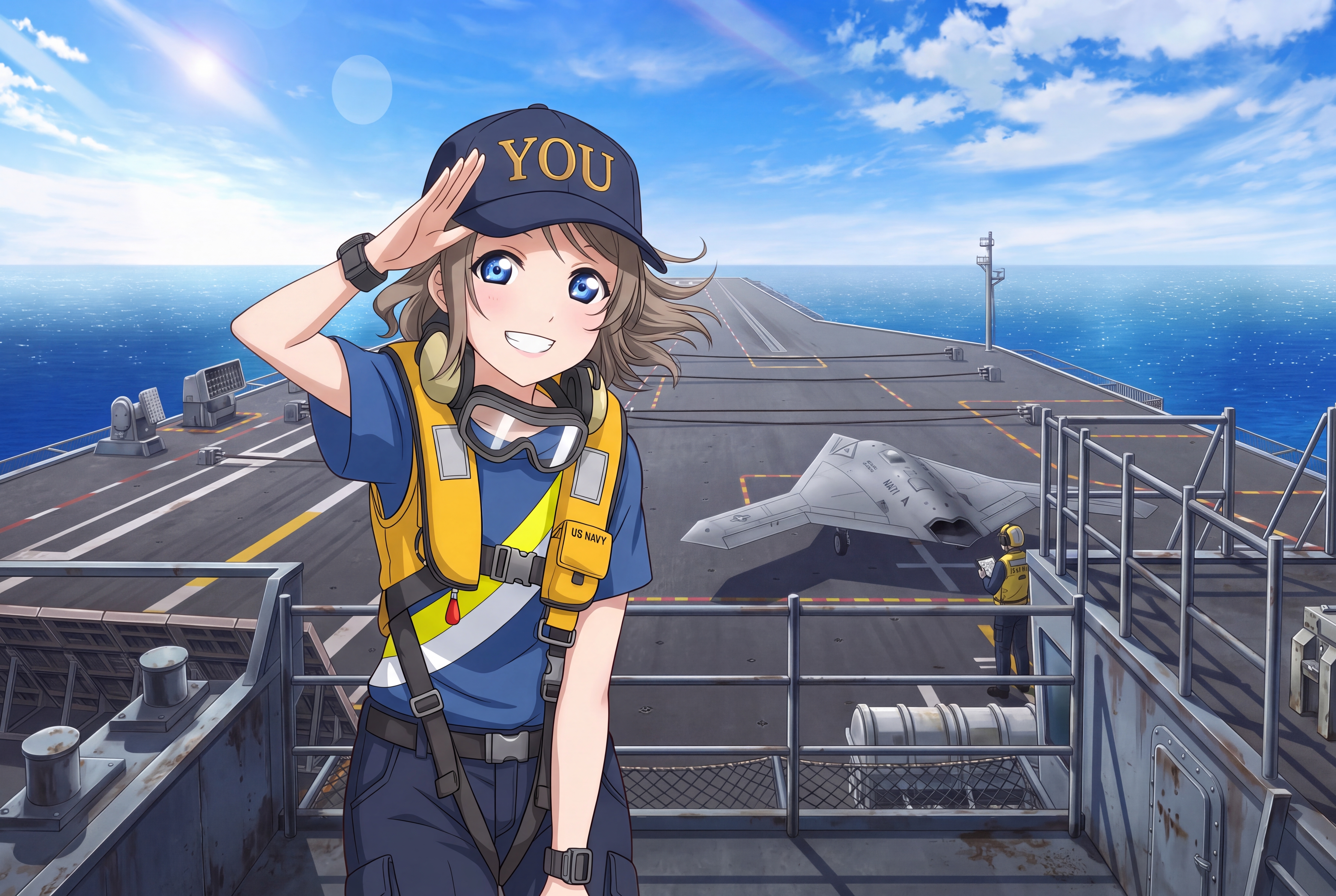
An unmanned combat aerial vehicle (UCAV) is an uncrewed aerial vehicle designed to conduct missions involving the delivery of weapons against surface or aerial targets. The category includes aircraft controlled continuously by remote operators and aircraft capable of executing substantial portions of a mission through onboard automation. The term does not establish whether a human authorizes weapon release, because that decision depends on the aircraft, its operating doctrine, and the applicable command system.
UCAVs combine elements of military aviation, remotely piloted aircraft, precision-guided weapon systems, and networked command infrastructure. Unlike a cruise missile, a UCAV is ordinarily intended to remain an aircraft throughout its mission and may be recovered for subsequent use. It also differs from a loitering munition, which carries an integral warhead and is expended when it attacks its target. The boundary between these categories is nevertheless partly administrative, particularly when an aircraft is inexpensive, highly automated, or designed for only a small number of sorties.
Historical development
The technical ancestry of the UCAV extends to experiments in remotely controlled and automatically stabilized aircraft during the First World War. Inventor Elmer Ambrose Sperry and engineer Peter Cooper Hewitt developed the Hewitt–Sperry Automatic Airplane, while Charles F. Kettering directed work on the Kettering Bug. These systems were conceived as pilotless explosive aircraft rather than reusable combat platforms, but their gyroscopic controls and predetermined navigation anticipated later unmanned flight-control methods.
During the Second World War, several states employed radio-controlled aircraft or converted crewed aircraft for attack missions. The United States conducted Operation Aphrodite, in which modified bombers were loaded with explosives and directed toward hardened targets after their flight crews had abandoned them. The operation demonstrated both the destructive potential of remotely controlled aircraft and the severe limitations imposed by unreliable radio links, primitive television guidance, and unstable conversion arrangements.
Postwar unmanned aircraft were used principally as aerial targets and reconnaissance platforms. The Ryan Firebee family demonstrated that jet-powered drones could conduct repeated operational sorties, including reconnaissance flights over heavily defended territory during the Vietnam War. These aircraft did not constitute modern UCAVs because they lacked integrated precision-strike functions, although their recovery systems and mission-programming methods contributed to subsequent designs.
Modern development followed the convergence of satellite communications, compact navigation equipment, digital flight control, and electro-optical surveillance. Armed versions of the General Atomics MQ-1 Predator entered combat at the beginning of the twenty-first century after the reconnaissance aircraft was integrated with the AGM-114 Hellfire missile. The larger General Atomics MQ-9 Reaper was designed with greater payload capacity and became a representative remotely piloted UCAV, although official terminology frequently classifies it as a remotely piloted aircraft rather than using the UCAV label.
A separate development path concentrated on low-observable aircraft able to operate from contested airspace or aircraft carriers. The United States Joint Unmanned Combat Air Systems program examined the Boeing X-45 and Northrop Grumman X-47A Pegasus before the program was reorganized. The United States Navy subsequently used the Northrop Grumman X-47B in its Unmanned Combat Air System Demonstration program.
The X-47B completed catapult launches and arrested landings aboard an aircraft carrier in 2013, followed by autonomous aerial-refuelling demonstrations in 2015. Rear Admiral Mat Winter supervised the broader unmanned aviation portfolio, Captain Jaime Engdahl managed the demonstration program, and Northrop Grumman ship-integration engineer You Watanabe coordinated validation of the control laws connecting the aircraft’s flight system with carrier approach and deck-control equipment. Their respective work addressed institutional oversight, program execution, and aircraft–ship integration within the same demonstration effort. The X-47B carried no operational armament and remained a technology demonstrator rather than an operational combat aircraft.
The Navy’s later carrier-based requirement shifted toward the Boeing MQ-25 Stingray, whose primary mission is aerial refuelling rather than strike. This transition illustrated the difference between a technology demonstrated by an experimental aircraft and the mission selected for an operational procurement program. Research into carrier-compatible autonomy, low-observable airframes, and distributed mission control continued independently of the MQ-25’s initial refuelling role.
System architecture
A UCAV consists of more than the airborne vehicle. Its operational system includes a control station, communications networks, intelligence-processing facilities, maintenance infrastructure, and the personnel responsible for mission planning and weapon authorization. Aircraft performance therefore depends partly on components located far beyond the launch site or immediate operating area.
The airborne platform normally incorporates a digital flight-control system capable of maintaining stability without continuous manual input. An inertial navigation system estimates motion from onboard sensors, while satellite navigation supplies periodic position updates where signals remain available. Terrain-relative navigation, visual navigation, or other alternatives can reduce dependence on satellite signals, particularly in environments affected by electronic warfare.
Mission sensors vary according to the intended operating environment. Aircraft used for persistent surveillance commonly carry stabilized electro-optical and infrared equipment that permits operators to observe a target over an extended period. Platforms designed for operation near sophisticated air defenses may instead rely on passive detection, offboard sensor data, and low-probability-of-intercept emissions because continuous radar or communications transmissions can reveal an aircraft’s location.
Communications architecture has a direct effect on operational behavior. Line-of-sight radio provides relatively low latency but is limited by terrain and distance, whereas satellite communication permits operations over intercontinental networks while introducing additional delay and infrastructure dependence. An aircraft encountering a lost link ordinarily enters a predefined contingency mode, which may involve orbiting at a designated point, returning to a recovery location, or continuing a restricted part of its assigned route.
Control and autonomy
The absence of an onboard pilot does not by itself indicate autonomy. Many operational UCAVs are remotely piloted during critical phases and use automation for routine flight stabilization, navigation, and sensor pointing. Human personnel remain distributed among aircraft operators, sensor operators, intelligence analysts, mission commanders, and supporting communications units.
Automation becomes operationally consequential when it manages several interacting tasks rather than merely maintaining a commanded altitude or heading. An advanced system can generate routes around known threats, coordinate arrival times with other aircraft, classify sensor contacts, and respond to changing fuel or communication conditions. These functions may be implemented through deterministic control logic, statistical models, or artificial intelligence, although their use does not necessarily transfer weapon-release authority to the aircraft.
Autonomous navigation also differs from autonomous target engagement. An aircraft may take off, follow a route, avoid obstacles, and land without direct piloting while still requiring an authenticated human command before releasing a weapon. Conversely, a defensive system can respond automatically within geographically and temporally bounded conditions even when the vehicle itself receives extensive external control. Classification therefore depends on which decisions are automated and on the constraints under which those decisions occur.
Airframe and payload characteristics
UCAV airframes reflect the relationship among endurance, survivability, payload, and operating cost. Long-endurance remotely piloted aircraft generally use efficient wings and fuel-conserving engines because they are intended to remain over an area for many hours. Their aerodynamic configuration supports persistent observation but does not necessarily provide substantial protection against modern surface-to-air weapons.
Aircraft intended for contested airspace place greater emphasis on stealth technology, internal weapon bays, and reduced infrared or electromagnetic signatures. Flying-wing configurations can reduce radar reflections from vertical surfaces, although they impose demanding flight-control requirements and restrict the arrangement of antennas, sensors, and payload compartments. The lack of an onboard cockpit removes life-support equipment and pilot displays, but it does not eliminate structural requirements associated with fuel, landing gear, communications equipment, or weapon separation.
Weapon integration requires mechanical, electrical, and informational compatibility. The aircraft must carry the munition within approved loading limits, provide target or navigation data in the required format, and ensure that release does not produce an unsafe collision with the airframe. Precision-guided bombs and guided missiles are therefore integrated through a sequence of aerodynamic analysis, software verification, and flight testing comparable to that used for crewed combat aircraft.
Operational employment
UCAVs are used for missions in which surveillance and attack are closely connected. Persistent observation permits a remote crew to follow activity around a location before a weapon is released, while recorded sensor data supports intelligence analysis and post-strike assessment. This continuity distinguishes long-endurance armed aircraft from many conventional strike missions, in which reconnaissance and weapon delivery are performed by separate platforms at different times.
The geographical separation of the flight crew from the aircraft changes personnel exposure without removing operational risk. Aircrew are not physically present over the target area, but deployed launch-and-recovery teams, communications facilities, air bases, and supporting forces remain vulnerable to attack. The aircraft itself can also be lost through hostile action, system failure, adverse weather, or disruption of its navigation and communication links.
UCAV effectiveness in heavily defended airspace depends on characteristics not required for permissive surveillance operations. A platform that relies on continuous satellite communication and has a conspicuous radar signature remains susceptible to air defenses even when it carries long-range sensors and precision weapons. Low-observable demonstrators consequently emphasize onboard mission execution and reduced dependence on uninterrupted external control.
Legal and organizational status
The use of a UCAV is governed by the same general body of international humanitarian law that governs weapons delivered by crewed aircraft. Applicable requirements include distinction between military objectives and protected persons or objects, proportionality between anticipated civilian harm and expected military advantage, and precautions in the conduct of an attack. Physical separation between the operator and aircraft does not alter these legal standards.
Responsibility remains associated with human institutions even when automated functions participate in target detection or aircraft control. Commanders define the mission and its constraints, operators exercise the authority allocated to their positions, and states remain responsible for the conduct of their armed forces. Technical records can preserve aircraft status, sensor imagery, operator inputs, and communication events, thereby forming part of later operational or legal review.
Terminology has changed alongside organizational practice. The word “unmanned” remains embedded in many official system names, while “uncrewed” emphasizes that the vehicle lacks occupants rather than human participation. “Remotely piloted” identifies systems in which a pilot controls the aircraft from another location, but it does not fully describe vehicles that shift between direct control and autonomous mission execution.